Depth Of Field: The Leica 35mm Nobody Talks About
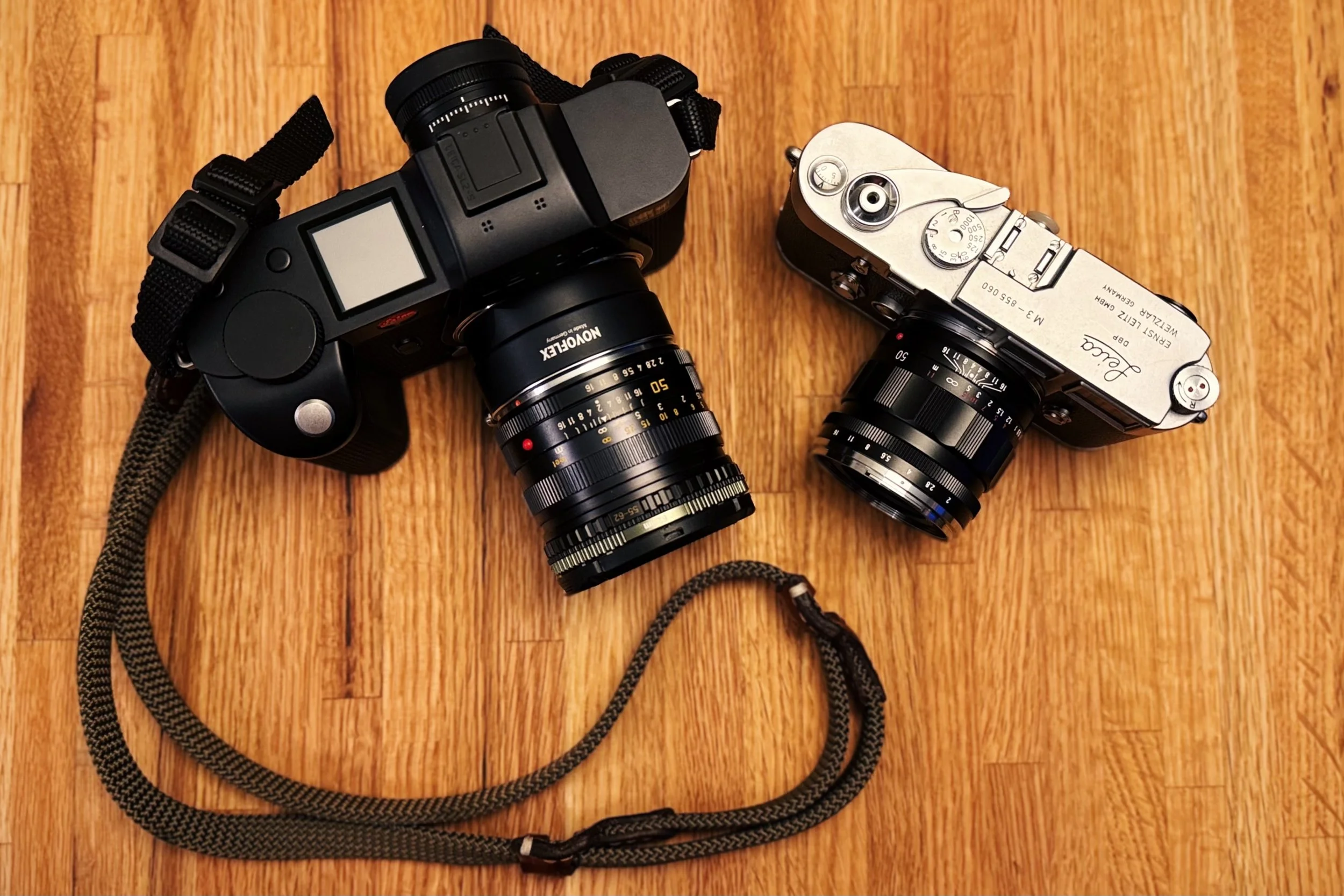
I’ve got a bone to pick with the topic of depth of field. It’s easy to go down the rabbit hole of chasing the perfect lens with the thinnest depth of field and the most amazing bokeh that the latest YouTube gear review cycle of the season is touting these days. But I don’t see anyone highlighting the importance of another technical aspect: Minimum Focus Distance. What’s the point of chasing that subjectively beautiful bokeh if you can’t practically use it?
These thoughts came up recently after my latest acquisitions, which I may write more on in the future. I recently purchased a Leica M3 to try the full analog rangefinder experience with what many describe as the finest M camera made. Being that I gravitate towards the 50mm focal length, the M3 was an easy choice.
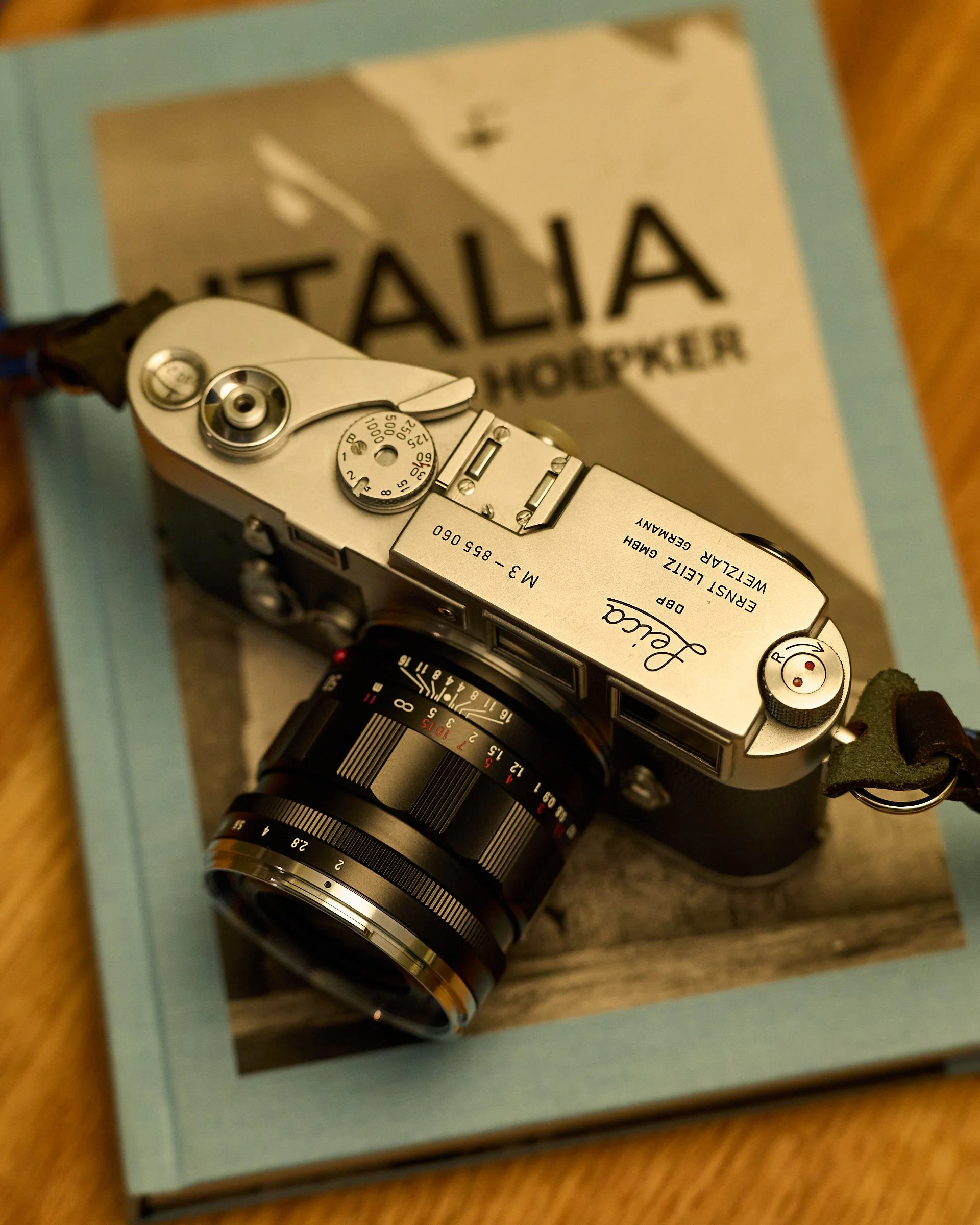
My fully analog experiment for 2026, a Leica M3. The Voigtlander 50mm APO balances nicely on the M3.
I complemented the M3 with arguably one of the best bang for buck 50mm lenses on the market today, the Voigtlander 50mm APO. A month later, I found a good deal on a Leica 35mm Summaron F2.8 with goggles. These two lenses would prove to be a great lightweight analog travel kit, so I thought.
This setup is turning out to be the perfect analog complement to my Leica SL2-S and Summicron R lens combination of the same focal lengths. I realized that there is one big difference between these pairs of lenses by design - Minimum Focus Distance. But just how much of a difference can there be in the final result between the M and R lenses at their respective maximum aperture and at the limit of their minimum focusing distance? As it turns out, quite a lot.
Most Leica M mount lenses are limited to a rangefinder coupled MFD of 0.7 meters, or 2.3ft. There are newer lenses from Leica that now focus down to 0.3 m; however, they require the use of electronic viewfinders. This is, of course, a moot point on my analog M3. Also, the steep entry point of these lenses and the required Visoflex finder make it so you really want to have a close focus on an M and are willing to pay for it. One could make the argument that the lens designs have outgrown the camera system at this point, but this is why we have the SL system, isn’t it?
Leica R lenses, on the contrary, never had this restriction. The Summicron R 50mm V2 has an MFD of 0.5 m, and the Summicron R 35mm V2 has an MFD of just 0.3 m. I’d like to point out that this is on par with Sigma’s L mount DG DN 35mm F2, DG DN Art 35mm F1.4, and just ALMOST as close as Leica’s very own APO Summicron 35mm SL lens, which has a minimum focus distance of just 27cm.
So where am I going with this? I think it’s time for some visual samples. I tested all four lenses in a similar setup with the same still subject, a bottle of Coca-Cola from Mexico (IYKYK) with the same exposure settings, or as close as I could get. At the 50mm focal length, we are comparing the Voigtlander 50mm APO and the Leica Summicron R 50mm V2. At the 35mm focal length, we are comparing the Leica Summaron 35mm F2.8 and the Leica Summicron R 35mm V2. Admittedly, the Summicron has a little less depth of field, but the Summaron does have quite a lot of character, sharpness, and contrast, which is quite impressive for a 70-year-old lens. I tested these on my Leica SL2-S and processed them consistently and minimally with Capture One Pro to review and compare the results for color, contrast, perceived sharpness, and the quality of bokeh.




The actual minimum focus distance of the Leica Summicron R 35mm V2.
As you can see, the 0.2m/20cm difference is quite a difference when looking at the still life photos below. A much tighter composition is possible at the 50mm focal length. The difference of 0.4m/40cm between the Summaron and Summicron is not even comparable. The 35mm Summicron is rumored to actually focus even closer than 0.3m, and I can verify this is the case by just how close I was able to get in the sample shots below, but for consistency of the test, I actually took a step back to get the bottle in the frame for a realistic comparison’s sake.
The performance of a lens design should be judged by the real-world capabilities stemming from all its parts and components versus just an aperture rating. I think this is a lesson normally learned through experience as all photographers go through the chasing bokeh phase. But remember, these are tools to produce an image and those results are all subjective once the photographer is able to master and execute the basics of photography.
The results speak for themselves, and I hope that it is easy to see the tremendous value and performance of the Leica R 50mm and 35mm Summicron lenses. I own the 35mm Summicron, the 50mm Summicron, and the 135mm Elmarit. All of these are Walter Mandler designs that share very similar, if not arguably identical, optical formulas as many of the most famous vintage Leica M lenses. There are drawbacks, though, mainly the size and weight compared to M-mount lenses. Depending on which system you are used to, this may or may not be an issue at all. This illustrates the use case for both systems. Leica M lenses provide some of the highest performance, character, and a very short focus throw in the smallest footprint possible. Leica R lenses can provide the same level of performance and sometimes better among vintage lenses, I would argue more perceived character, and a more granular, fine-tuned focus throw for precision. Use this information wisely to choose the right tool for the job.
I would like to end this article on a high note and sing praise of the Leica Summicron R 35mm version two. If you are familiar with Leica lenses, you have probably heard the praise of the 35mm Summicron M version IV, often called the “King of Bokeh”. This nickname has been argued over for some time, with many stating the original pre-aspherical 35mm Summilux being the true “King of Bokeh”. While there is plenty of information and samples out there showing why everyone has made their own conclusions to the title of “King of Bokeh”, I am clearly in the mindset that neither of those lenses can technically make that claim due to their limitation of minimum focus distance. Both the pre-aspherical 35mm Summilux and 35mm Summicron IV are limited to an MFD of 1m and 0.7m respectively. The original pre-aspherical 35mm Summilux is what could be considered a very old lens design alongside the 35mm Summicron 8 element and 35mm Summaron. The 35mm Summicron R V2 and 35mm Summicron M IV were released within several years of each other, with the 35mm Summicron R on paper a better performer.
Some of my favorite images in 2025 were taken with the Leica 35mm Summicron R V2.




I will confidently state the Leica 35mm Summicron R V2 should be considered the real “King of Bokeh” amongst vintage 35mm Leica lenses. A classic Mandler design of the same era as the 35mm Summicron IV and multiple personalities. It is bigger and heavier, but once you get to know its strengths, it is a very capable tool that can produce wonderful images. It is a bit heavy by today’s standards as it is an all-alloy housing, but it is built like a tank. The modern-day minimum focus performance with the character of a classic Leica 35mm Summicron creates a result that is unique. It can blow out the background with beautiful bokeh that is very signature of classic Mandler Leica lenses, but stop it down to f5.6 and it is bitingly sharp in the center with a very natural fall off in the extreme corners. In 2026, a copy of these lenses in good condition is averaging between $1200-1800 depending on accessories, condition, and if it has been recently serviced by a qualified technician. If you can find a good copy, I believe it is the best bargain in the collectible vintage Leica 35mm lens market.
If you would like to see more samples of what the Leica 35mm Summicron R V2 can do on the SL2-S, you can view them in my Cuenca 2025 post.